Dorottya Vekony
Biografia
Dorottya Vékony è un’artista visiva e dottoranda presso la Moholy-Nagy University of Art and Design (MOME) di Budapest, dove la sua ricerca indaga i confini mutevoli tra corpo sociale e biologico. Ha conseguito un Master in Fotografia al MOME e ha studiato anche a Lisbona. Parallelamente alla sua pratica artistica, lavora come assistente presso l’Istituto di Media e Design dell’Università Eszterházy Károly.
Nel suo lavoro, Vékony esplora da tempo il corpo come struttura aperta a un’interpretazione radicale, utilizzando spesso la fotografia come mezzo espressivo primario, estendendolo però attraverso strategie performative come la rievocazione, la compressione e la messa in scena. Negli ultimi anni, la sua attenzione si è estesa a questioni di fertilità e diritti riproduttivi, non solo nella sfera umana ma anche in relazione alla vita non umana. La sua ricerca abbraccia fiori, impollinatori e interdipendenze ecologiche, ipotizzando anche il futuro plasmato dalle tecniche di riproduzione artificiale e biotecnologica.
Vékony ha presentato mostre personali e collettive presso la Longtermhandstand Gallery, Budapest (2025); la KunsthalleKošice, Slovacchia (2024); la Torula, Győr; la Budapest Gallery (2023); l’AQB, Budapest (2019); l’ENA Viewing Space, Budapest (2018); e la Project Room del Capa Center, Budapest (2014). Le sue opere sono state esposte anche in numerose mostre collettive internazionali, tra cui alla KunsthalleExnergasse, Vienna; al Ludwig Museum, Budapest; alla Praterateliers Hall, Vienna; a Unseen Amsterdam; a Photo London – Peckham 24; alla Maison Européenne de la Photographie, Parigi; al Museum of Fine Arts, Boston; al C/O Berlin; al Balassi Institute, Istanbul; all’UGM Studio, Maribor; alla MUSE Gallery, Mumbai; e al Robert Capa Contemporary Photography Center, Budapest.
È membro di Secondary Archive, una piattaforma d’arte femminile dell’Europa centrale e orientale (dal 2020), di FUTURES (2021) e dello Studio of Young Artists’ Association (dal 2011). Il suo lavoro è stato premiato con il József Pécsi Photography Grant (2015, 2017, 2018), l’Esterházy Art Prize (2025) e il TóTalJoyPrize (2025).
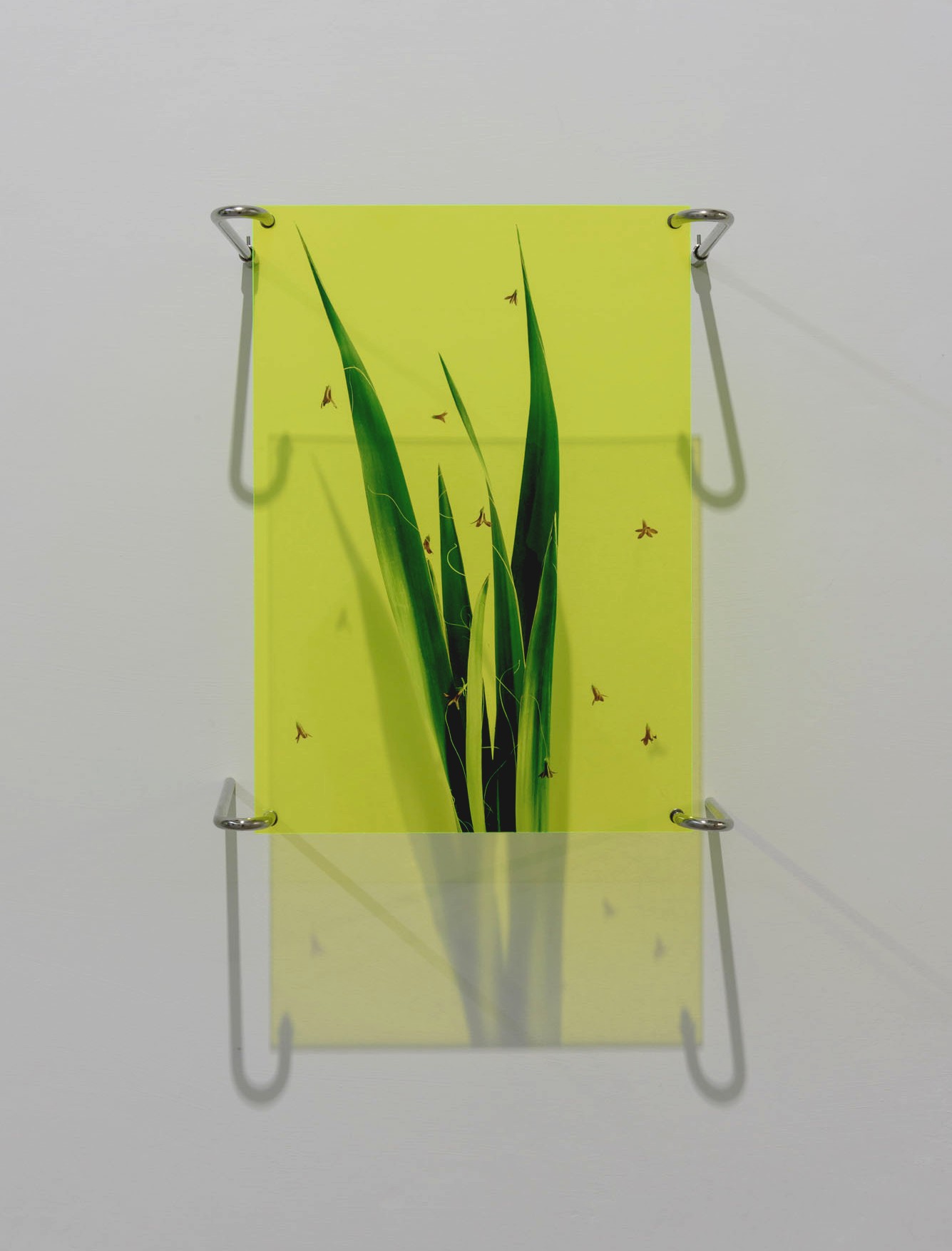
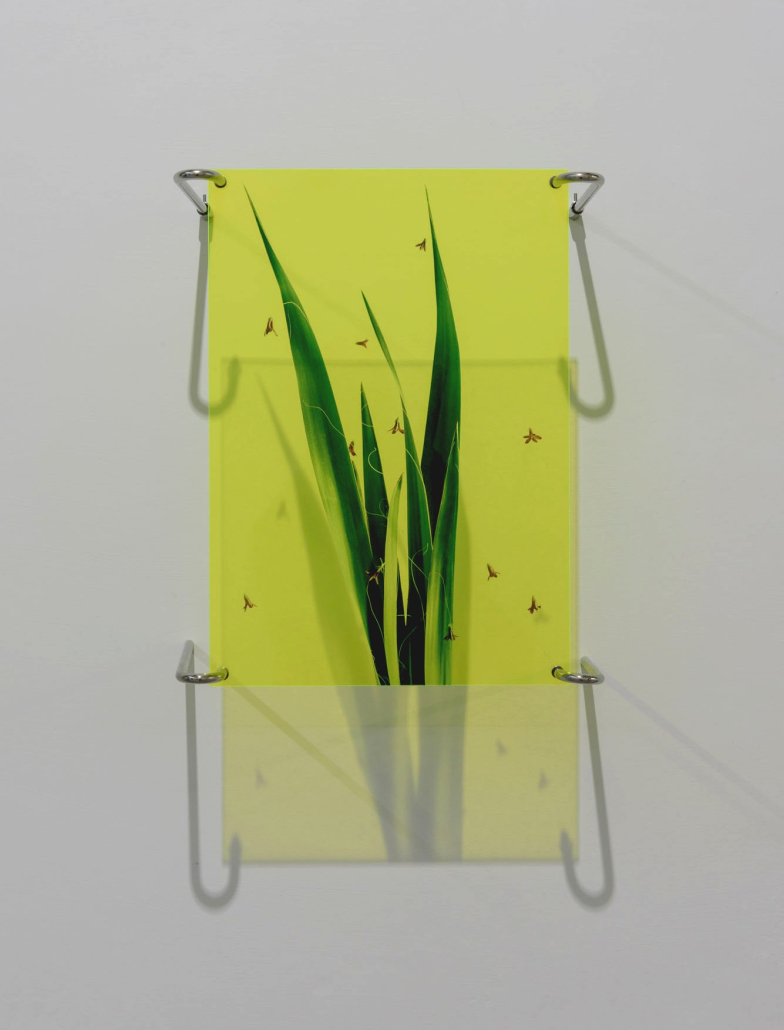
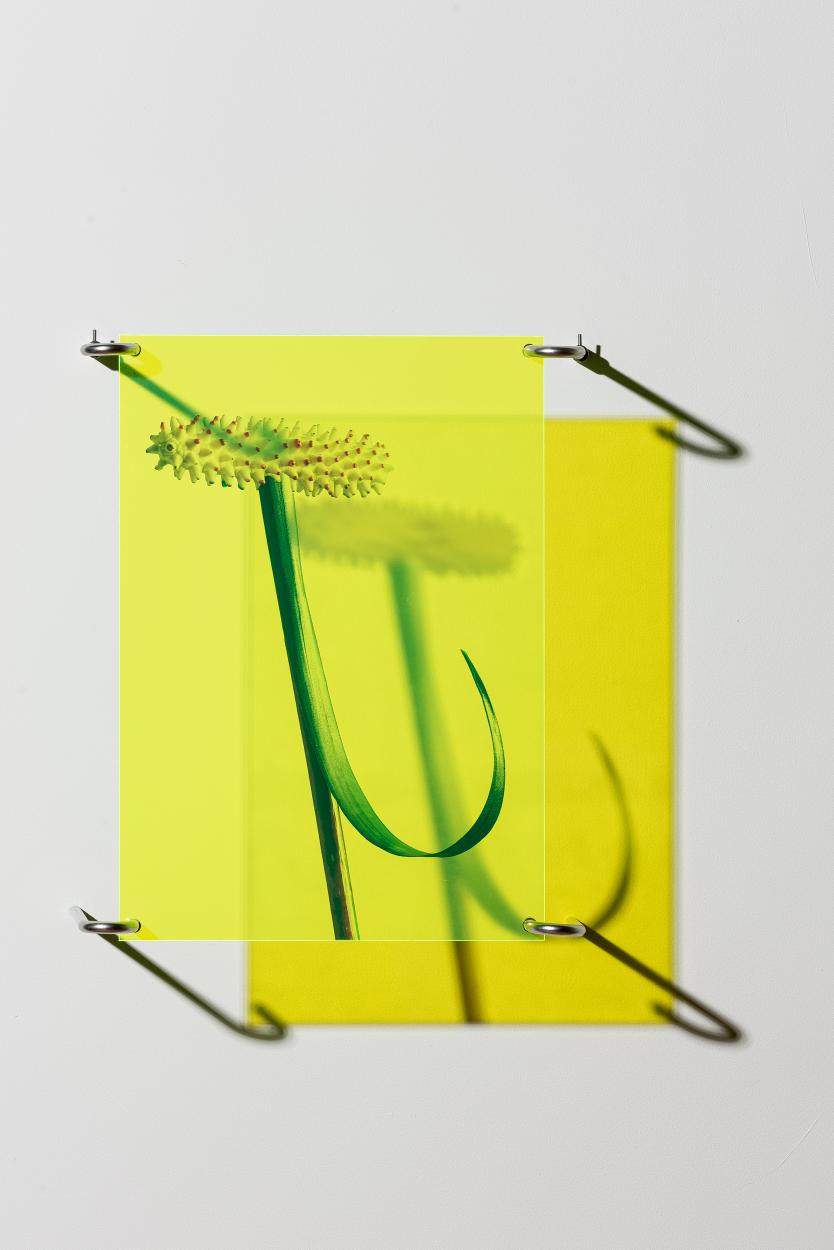
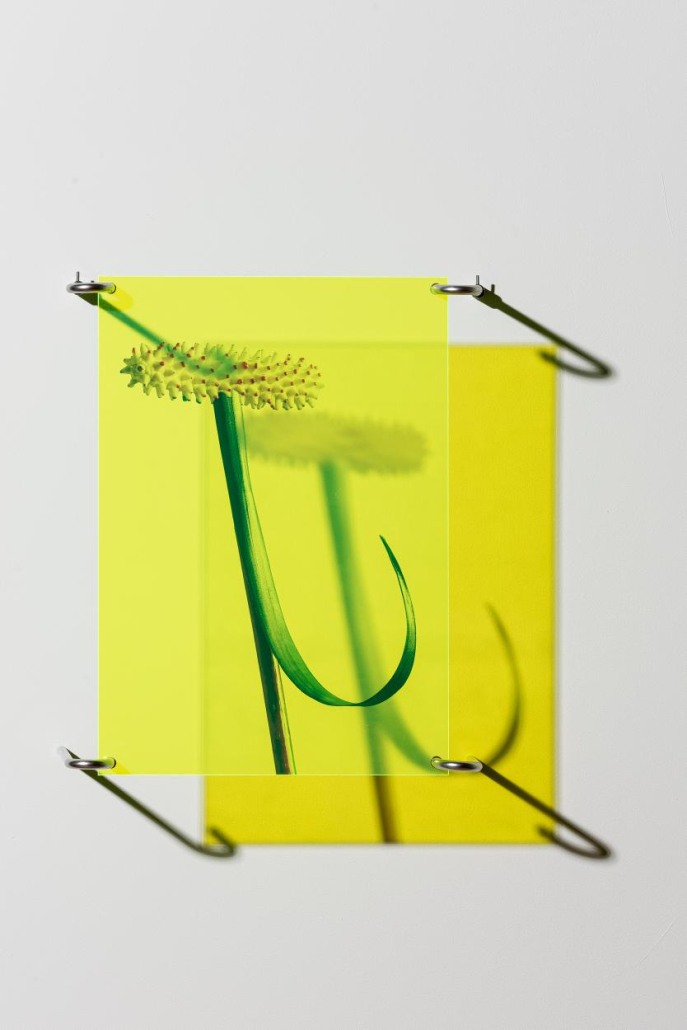
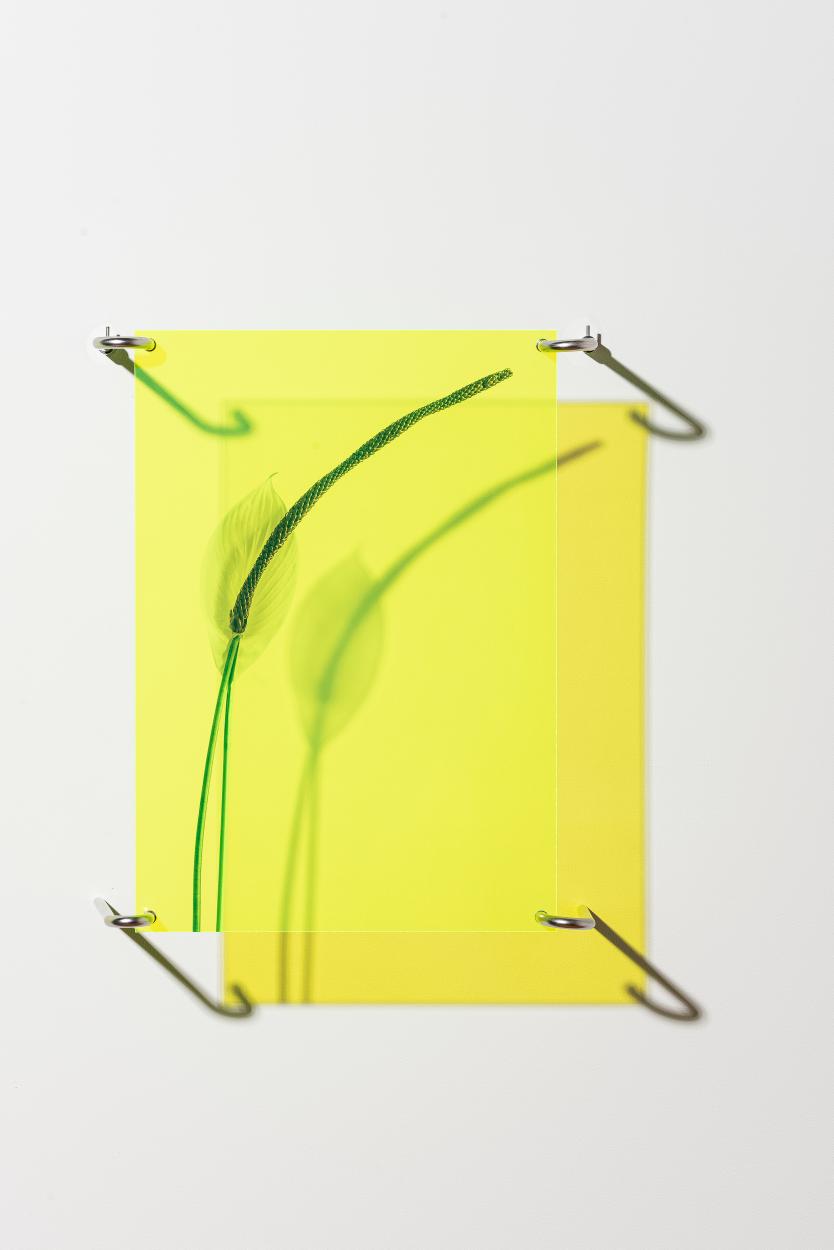
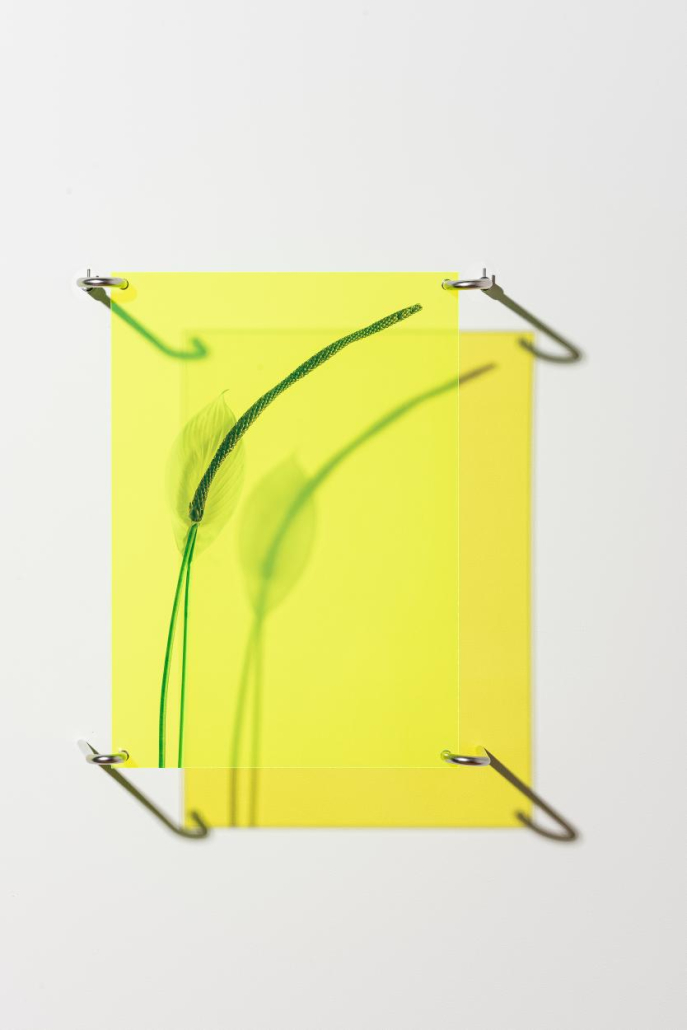
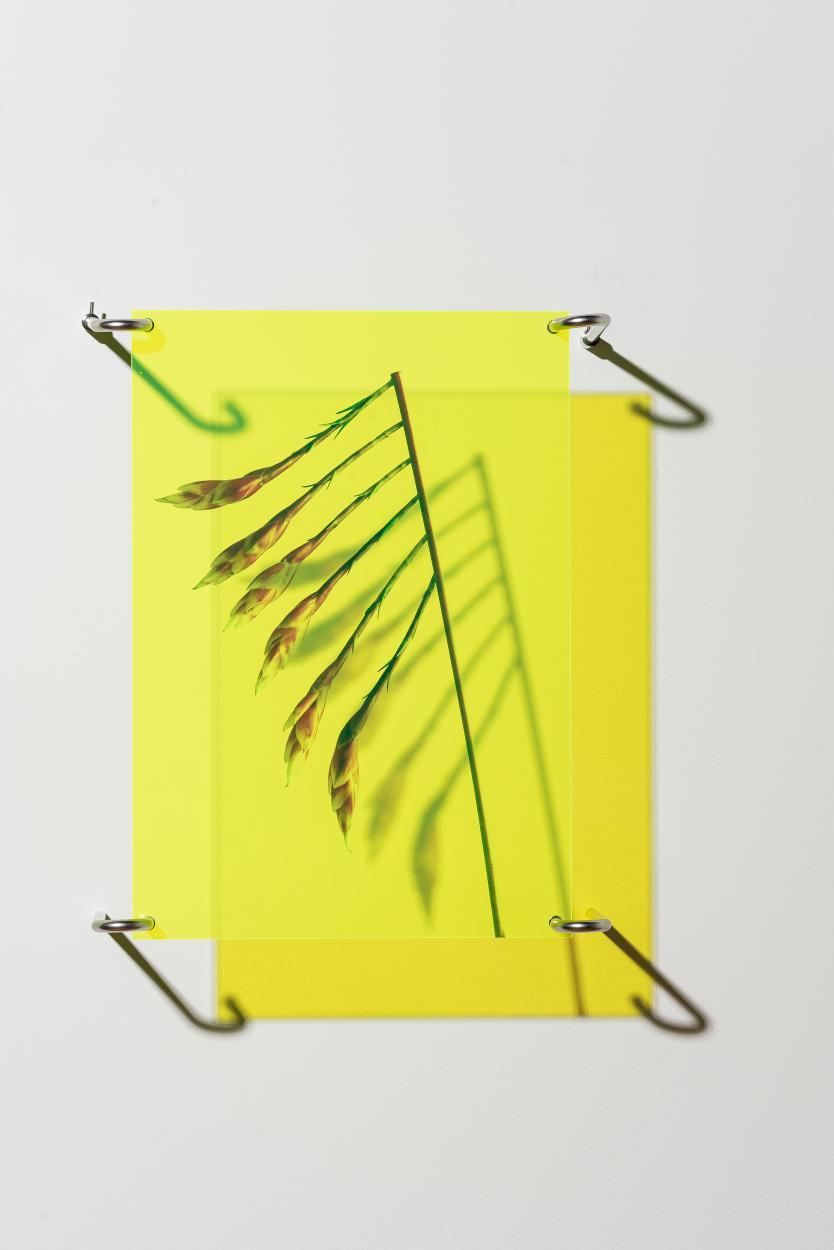
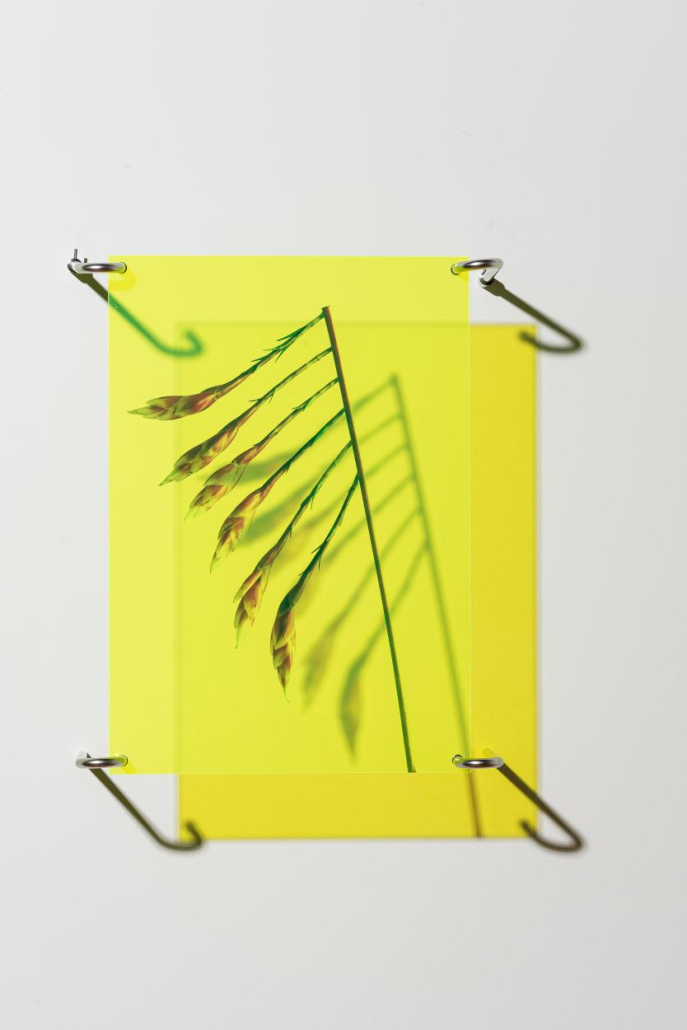
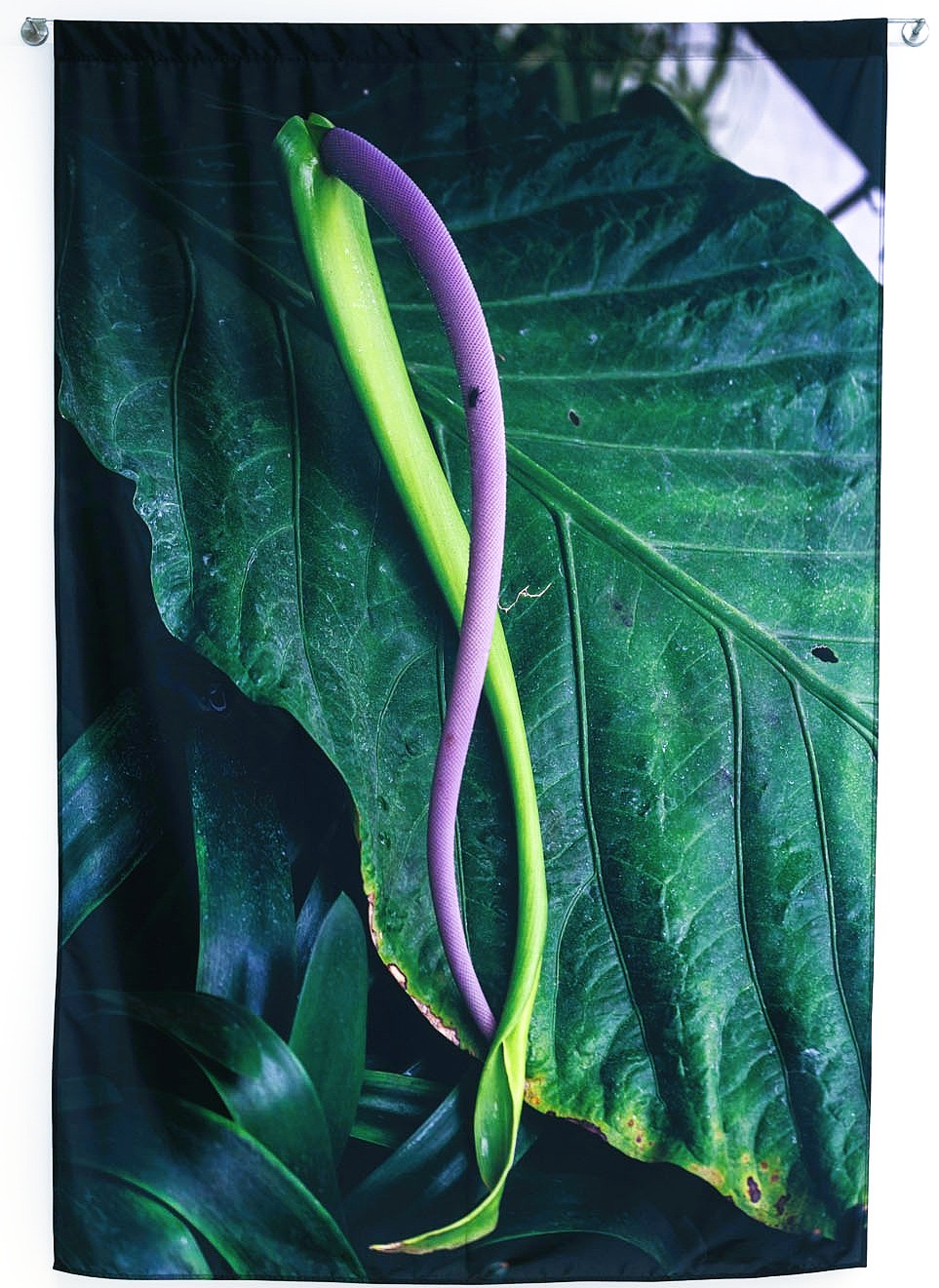
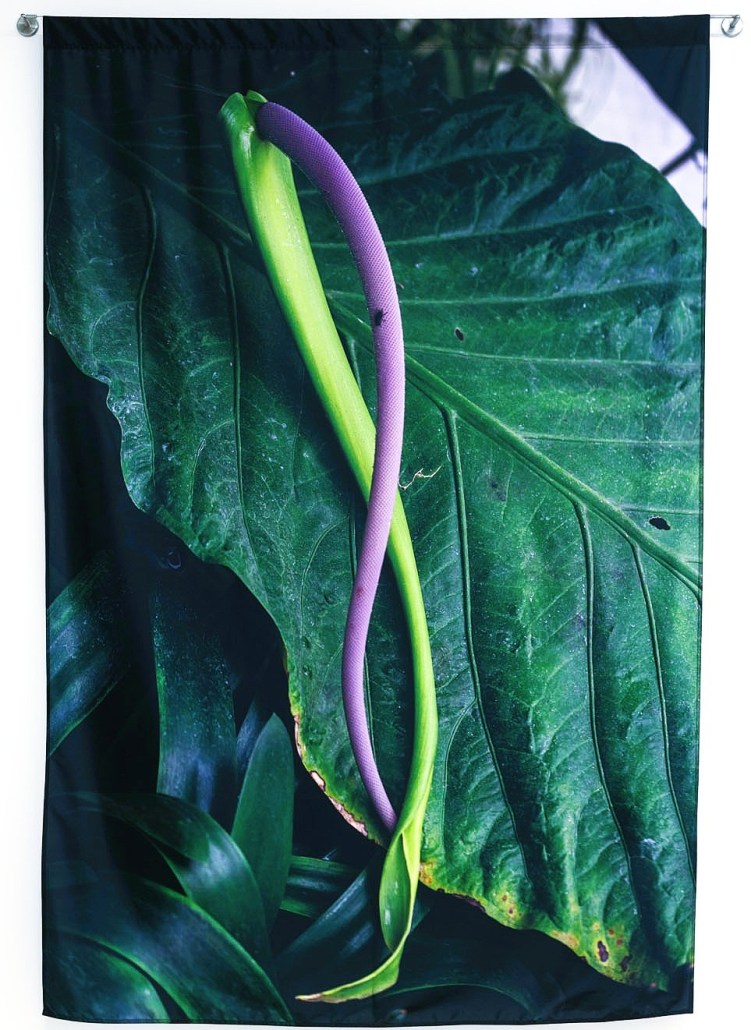
Su Extended Flowering, 2024; Acrilico con stampa UV, tessuto
Dorottya Vékony studia da anni la fertilità e la riproduzione umana, concentrandosi in particolare sulle crisi in cui i processi naturali del parto si bloccano, rendendo inevitabile l’esplorazione di nuove strategie. Mentre la sua precedente pratica artistica si concentrava sul rapporto tra corpo umano e regole sociali, il suo lavoro recente sposta l’attenzione sulle piante, sulla crisi ecologica dell’impollinazione e sulle sue implicazioni socio-scientifiche.
L’impollinazione è un elemento cruciale nella riproduzione delle piante da fiore o da seme e, su scala più ampia, è alla base della sopravvivenza di interi ecosistemi. Questo fondamento ha dovuto affrontare gravi sfide negli ultimi decenni. Il drastico declino delle popolazioni di insetti, la prevalenza dell’agricoltura monoculturale e l’uso eccessivo di pesticidi hanno impedito agli impollinatori naturali di svolgere in modo affidabile i loro ruoli essenziali. Di conseguenza, vi è una crescente urgenza di attrarre impollinatori alternativi e di modificare geneticamente le piante, aumentandone l’attrattiva per gli impollinatori attuali e futuri. Sebbene l’ingegneria genetica e altre tecniche di allevamento artificiale offrano soluzioni promettenti, sollevano anche complesse questioni etiche ed ecologiche, in particolare per quanto riguarda il delicato equilibrio tra sistemi naturali e intervento umano.
Extended Flowering riflette su questi scenari liminali, immaginando un futuro in cui le norme biologiche e sociali diventano sempre più confuse. In questa realtà speculativa, il mondo vivente viene rimodellato dal crescente intervento umano e dalla radicale reinterpretazione della vita stessa. I “ritratti vegetali hackerati” sfruttano l’ingegneria genetica per creare una nuova estetica: fiori resi ancora più attraenti per i loro impollinatori. Questa installazione unisce speculazione scientifica e riflessione artistica, incoraggiando la contemplazione del futuro della natura, della responsabilità dell’umanità, del fragile equilibrio tra tecnologia e ambiente e delle crisi che mettono a repentaglio l’impollinazione.
Biography
Dorottya Vékony is a visual artist and doctoral student at the Moholy-Nagy University of Art and Design (MOME), Budapest, where her research investigates the shifting boundaries between the social and biological body. She completed her MA in Photography at MOME and also studied in Lisbon. Alongside her artistic practice, she works as an assistant lecturer at the Media and Design Institute of Eszterházy Károly University.
In her work, Vékony has long explored the body as a structure open to radical interpretation, often using photography as a primary medium while extending it through performative strategies such as reenactment, compression, and staging. In recent years, her focus has expanded toward questions of fertility and reproductive rights, not only in the human sphere but also in relation to non-human life. Her research encompasses flowers, pollinators, and ecological interdependencies, while also speculating on futures shaped by biotechnological and artificial reproductive techniques.
Vékony has presented solo and duo exhibitions at Longtermhandstand Gallery, Budapest (2025); Kunsthalle Košice, Slovakia (2024); Torula, Győr; Budapest Gallery (2023); AQB, Budapest (2019); ENA Viewing Space, Budapest (2018); and the Project Room of the Capa Center, Budapest (2014). Her works have also appeared in numerous international group exhibitions, including at Kunsthalle Exnergasse, Vienna; Ludwig Museum, Budapest; Praterateliers Hall, Vienna; Unseen Amsterdam; Photo London – Peckham 24; Maison Européenne de la Photographie, Paris; Museum of Fine Arts, Boston; C/O Berlin; Balassi Institute, Istanbul; UGM Studio, Maribor; MUSE Gallery, Mumbai; and Robert Capa Contemporary Photography Center, Budapest.
She is a member of the Secondary Archive, a Central and Eastern European women’s art platform (since 2020), FUTURES (2021), and the Studio of Young Artists’ Association (since 2011). Her work has been recognized with the József Pécsi Photography Grant (2015, 2017, 2018), the Esterházy Art Prize (2025), and the TóTalJoy Prize (2025).
About Extended Flowering, 2024; UV print acrylic, textile
Dorottya Vékony has been researching fertility and human reproduction for years, focusing particularly on crises where natural birth processes stall, making exploring new strategies unavoidable. While her earlier artistic practice concentrated on the relationship between the human body and societal regulations, her recent work shifts focus to plants, the ecological crisis of pollination, and its socio-scientific implications.
Pollination is a crucial element in the reproduction of flowering or seed-bearing plants and, on a larger scale, underpins the survival of entire ecosystems. This foundation has faced severe challenges in recent decades. The drastic decline in insect populations, the prevalence of monocultural agriculture, and excessive pesticide use have hindered natural pollinators from reliably fulfilling their essential roles. Consequently, there is a growing urgency to attract alternative pollinators and to genetically modify plants genetically, enhancing their appeal to both current and future pollinators. While genetic engineering and other artificial breeding techniques offer promising solutions, they also raise complex ethical and ecological questions, particularly concerning the delicate equilibrium between natural systems and human intervention.
Extended Flowering reflects on these liminal scenarios, envisioning a future where biological and social norms become increasingly blurred. In this speculative reality, the living world is reshaped by escalating human intervention and the radical re-imagination of life itself. The “hacked plant portraits” leverage genetic engineering to create a new aesthetic – flowers rendered even more enticing to their pollinators. This installation bridges scientific speculation and artistic reflection, encouraging contemplation on the future of nature, humanity’s responsibility, the tenuous balance between technology and the environment, and the crises jeopardizing pollination.
Available Works