Matteo Silverii
Biografia
Matteo Silverii (Caserta, 1994) è un artista visivo e architetto italiano residente a Bruxelles, con studio a Napoli. Nella sua pratica integra pittura e disegno, esplorando temi come il tempo, la memoria e la poetica dell’archivio attraverso immagini preesistenti e frammenti visivi personali.
Si è formato presso l’Accademia di Architettura di Mendrisio, in Svizzera, e ha studiato disegno artistico e illustrazione a Napoli. Ha partecipato a mostre collettive quali ThisIs the Studio and the Studio Is Many Things (2017 – COSÈ Gallery, Castelfranco Veneto), Freespace (2018 – 16ª Biennale di Architettura di Venezia) e Dibujos a Jenaro (2023 – Ambasciata del Paraguay, Roma / Villa Pignatelli, Napoli). Nel 2024 ha presentato la sua prima mostra personale, Nostalgico mio presente (2024 – Acquedotto Augusteo del Serino, Napoli), curata da Concetta Luise e accompagnata da un catalogo edito da Perlearti Editore (2025).
Sulle opere in mostra
Figurines, 2023 – ongoing
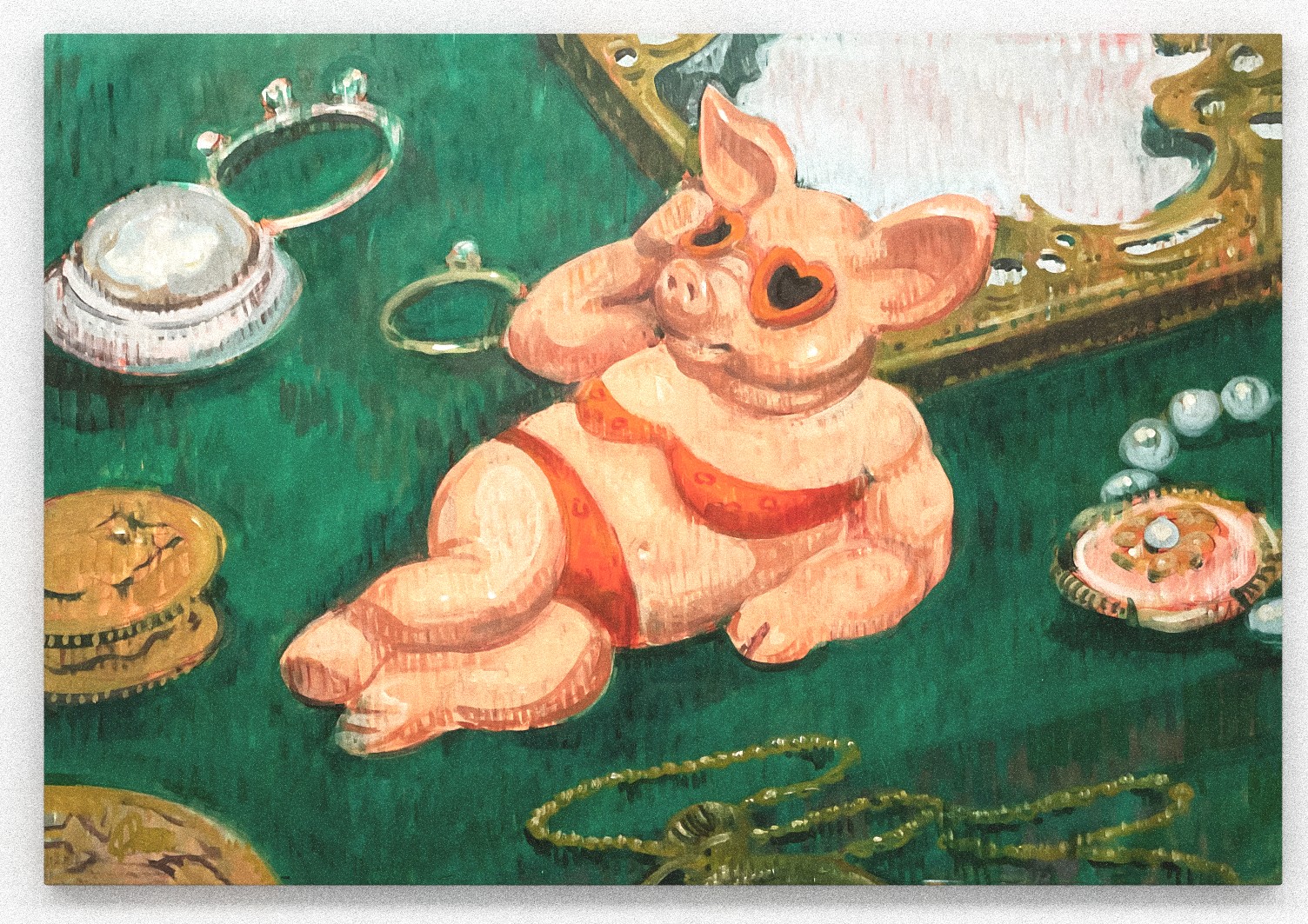
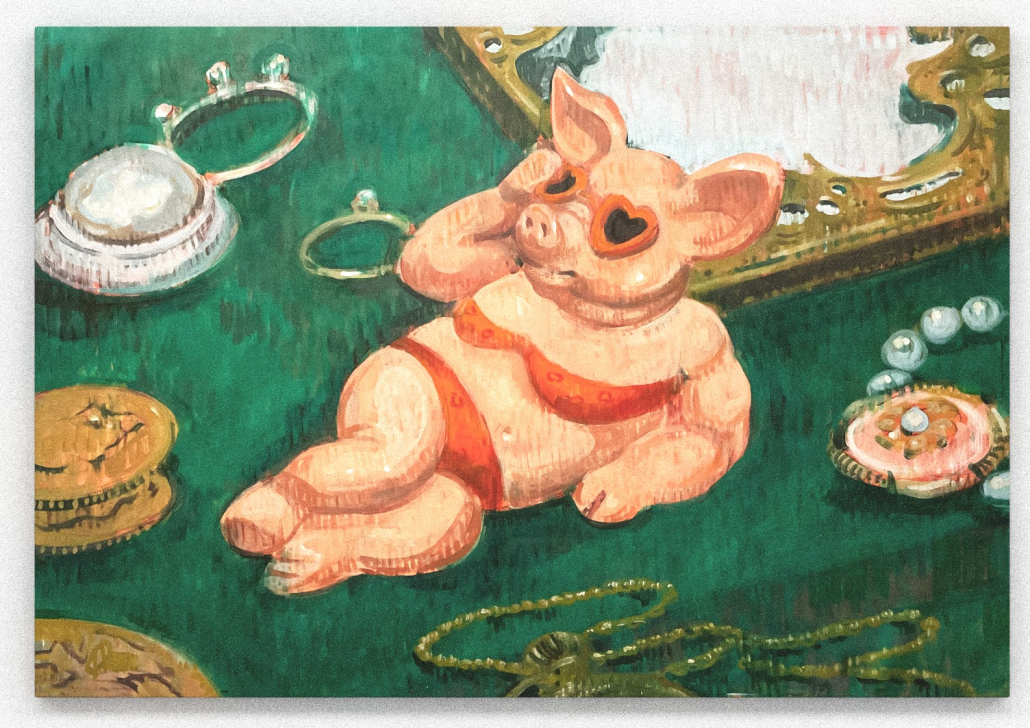
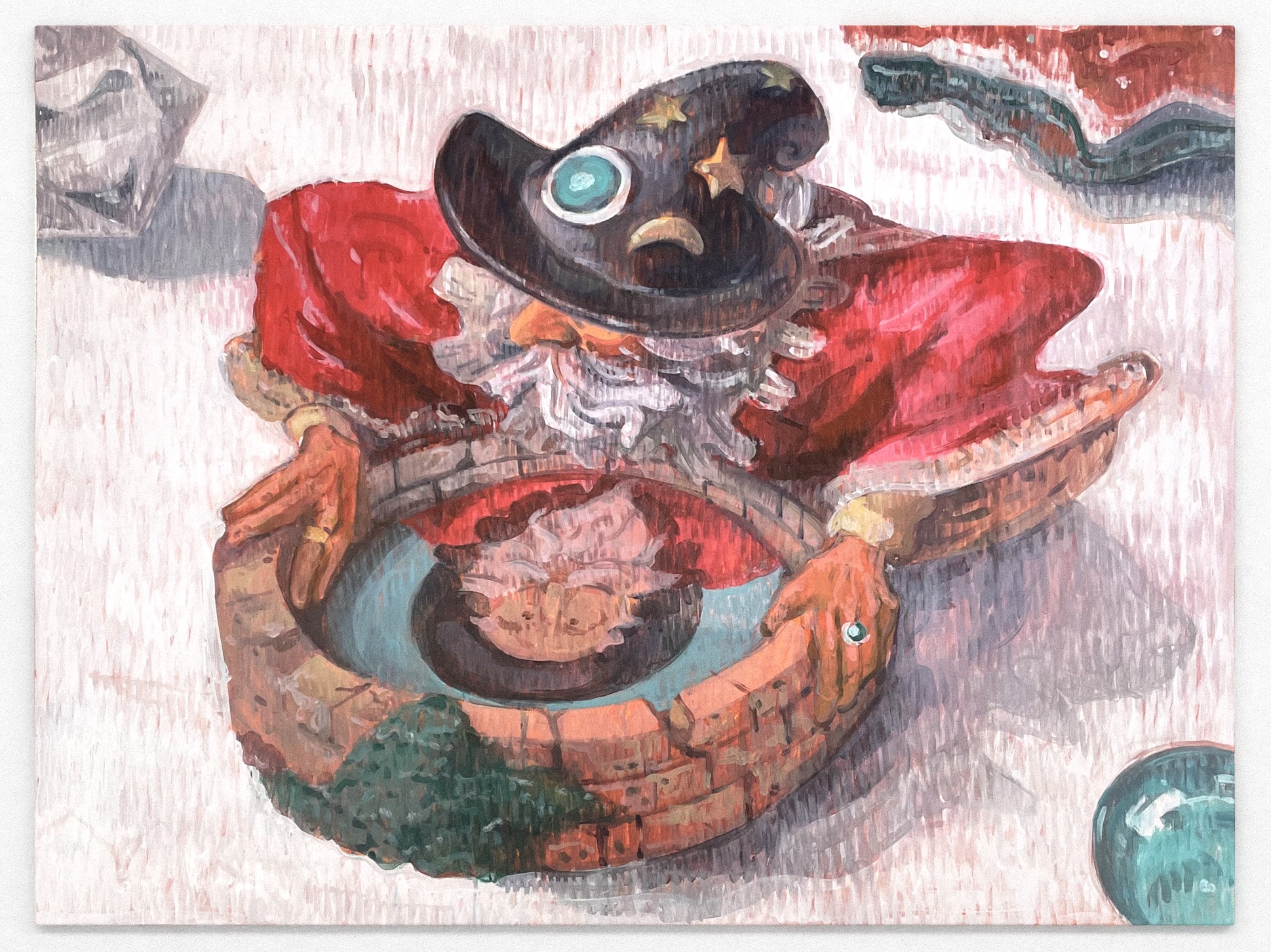
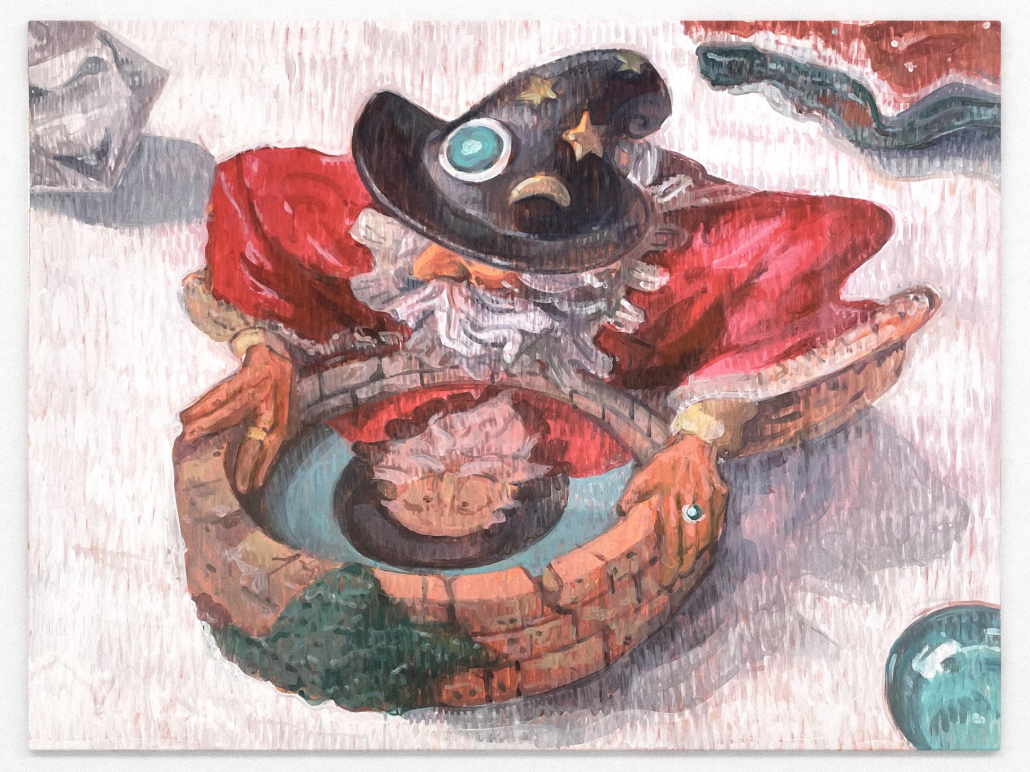
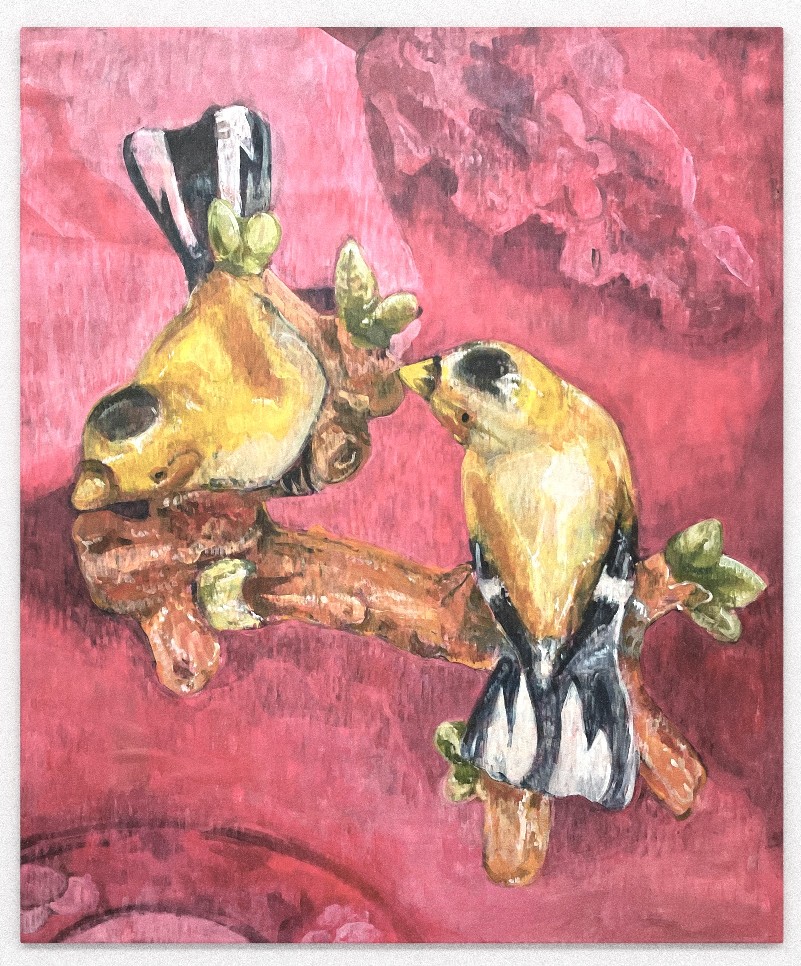
La serie “Figurines” esplora come soggetti una selezione di oggetti trovati nel mercato delle pulci di Place du Jeu de Balle, a Bruxelles. Questo luogo, quotidianamente abitato dai banchi dei venditori e da innumerevoli oggetti di seconda mano — talvolta kitsch o portatori di un gusto non più contemporaneo — diventa spazio di nuove associazioni, significati e narrazioni.
Soprammobili, ceramiche, giocattoli e statuine che catturano lo sguardo diventano il centro dell’opera; i tavoli su cui sono esposti si trasformano nella scenografia attraverso cui questi oggetti raccontano nuove storie.
Tali oggetti “orfani” diventano così soggetti attivi, portatori di espressività e memoria. Sottratti alla loro funzione originaria, vengono riletti come presenze narrative, capaci di accumulare tracce, gesti e proiezioni emotive. Il collezionismo qui praticato dall’artista non è inteso come pratica nostalgica, ma come atto di selezione e riscrittura, in cui nuove associazioni e significati latenti emergono attraverso accostamenti inattesi. Le ceramiche si trasformano quindi in dispositivi narrativi, capaci di suggerire storie frammentarie e relazioni immaginate, oscillando tra intimità, desiderio e costruzione del senso.
Hyésouhyiós, 2020–2022
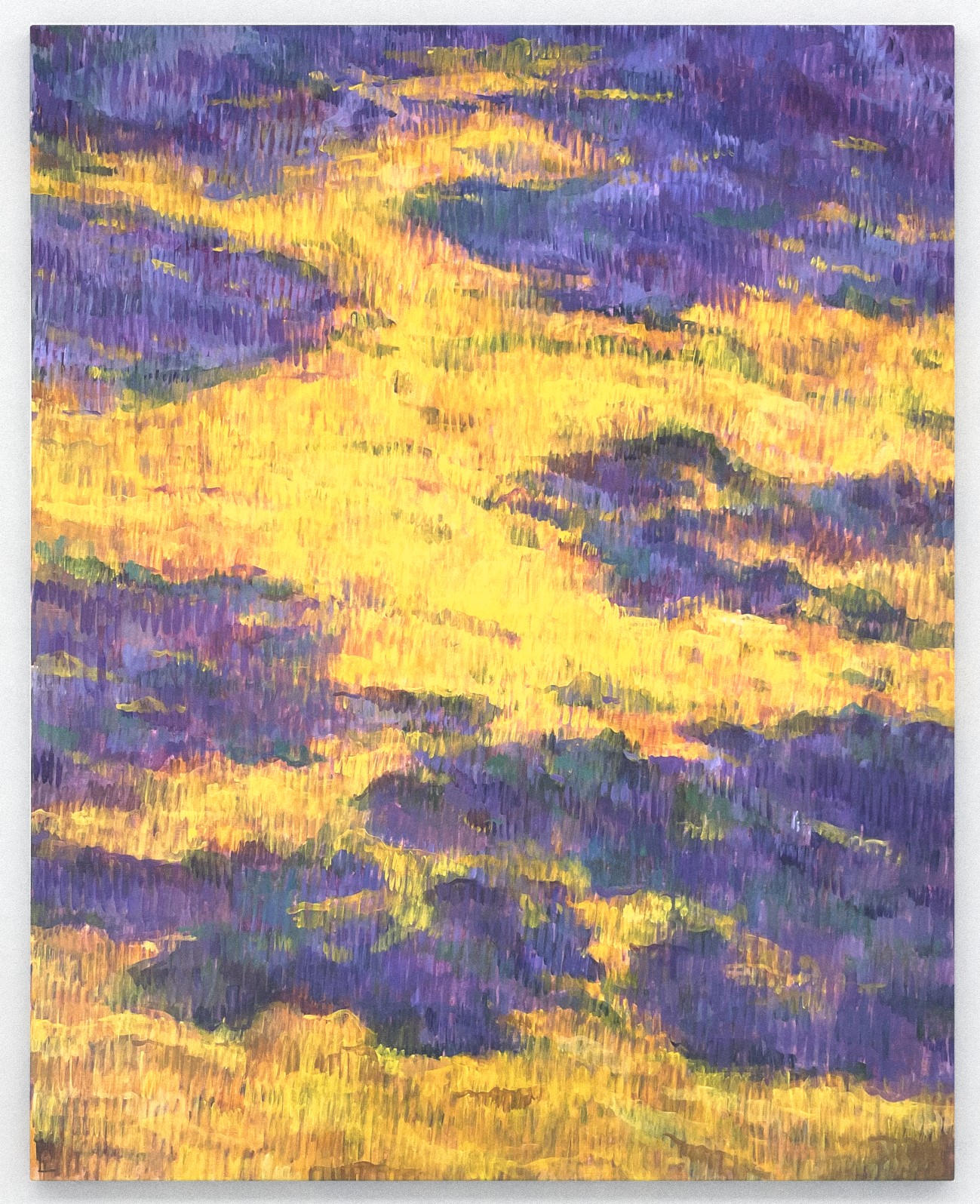
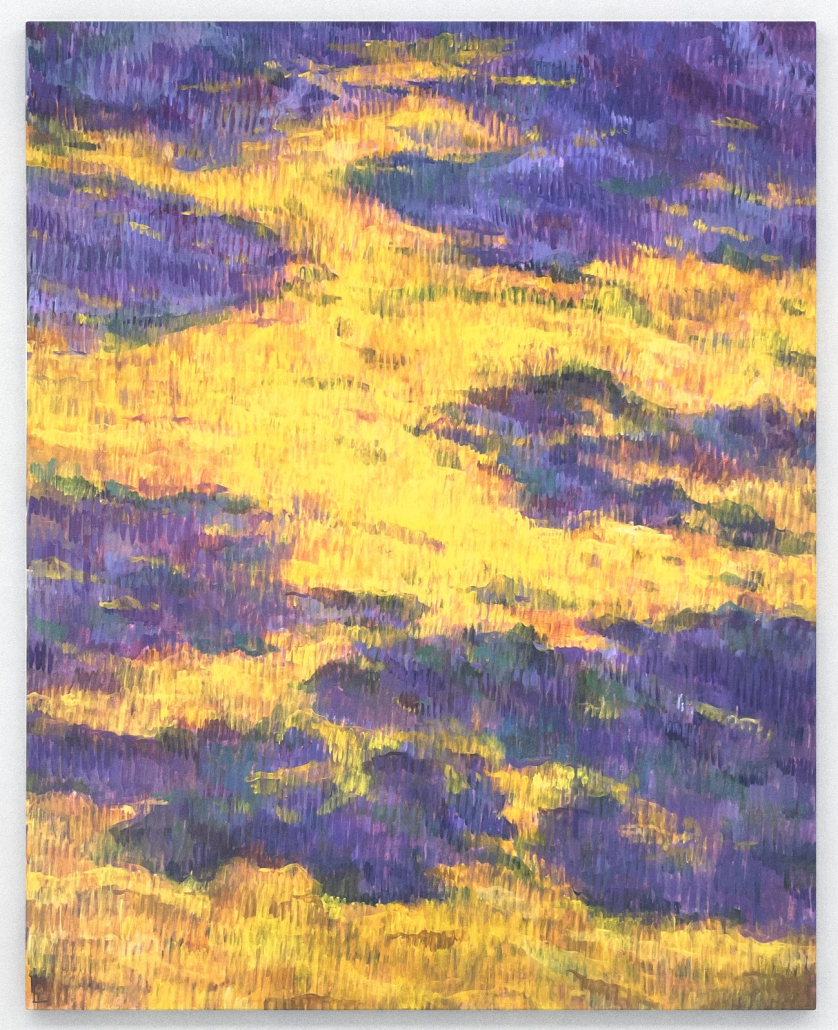
Progetto articolato in più capitoli, formati e tecniche, che approfondisce la natura mutevole e trasformativa del Vesuvio. Nel tentativo di svestire il vulcano della sua immagine più pittoresca e stereotipata, esso viene rappresentato da diversi punti del territorio circostante, allontanandosi dal profilo classico e immediatamente riconoscibile della veduta dal golfo.
La serie cerca di individuare nuovi significati simbolici della montagna attraverso un uso selettivo del colore, concentrandosi di volta in volta su un tema specifico.
Qui è presentato un estratto della serie gialla, in cui viene studiato il fronte nord-occidentale, riflettendo sull’interazione tra distruzione e fertilità nel paesaggio vulcanico e nella sua vegetazione peculiare, insieme al rapporto cromatico tra la terra violastra e l’acceso colore giallo della vegetazione. Attraverso degli zoom sul paesaggio nel periodo della fioritura delle ginestre, questo viene reso irriconoscibile se non per alcuni dettagli: la fonte perde origine nel processo di decontestualizzazione dell’immagine, che diventa pittura, “campo”.
Biography
Matteo Silverii (Caserta, 1994) is an Italian visual artist and architect based in Brussels, with a studio in Naples. His practice combines painting and drawing, exploring themes such as time, memory, and the poetics of the archive through pre-existing images and personal visual fragments. He trained at the Academy of Architecture, Medrisio, and studied artistic drawing and illustration in Naples.
Silverii has participated in group exhibitions including This Is the Studio and the Studio Is Many Things (2017 – COSÈ Gallery, Castelfranco Veneto), Freespace(2018 – 16th Venice Architecture Biennale), and Dibujos a Jenaro (2023 – Paraguayan Embassy, Rome / Villa Pignatelli, Naples). In 2024, he presented his first solo exhibition, Nostalgicomiopresente (2024 – AcquedottoAugusteo del Serino, Naples), curated by Concetta Luise and accompanied by a catalogue by PerleartiEditore (2025).
About the works on display
Figurines, 2023 – ongoing
The Figurines series explores a selection of objects found at the flea market of Place du Jeu de Balle in Brussels. This place, daily inhabited by vendors’ stalls and countless second-hand objects—sometimes kitsch or bearers of a no-longer-contemporary taste—becomes a space for new associations, meanings, and narratives. Ornaments, ceramics, toys, and figurines that catch the eye become the center of the work; the tables on which they are displayed are transformed into a stage through which these objects tell new stories.
These “orphaned” objects thus become active subjects, carriers of expressiveness and memory. Removed from their original function, they are reread as narrative presences, capable of accumulating traces, gestures, and emotional projections. The collecting practiced by the artist is not understood as a nostalgic endeavor, but as an act of selection and rewriting, in which new associations and latent meanings emerge through unexpected juxtapositions. The ceramics thus become narrative devices, capable of suggesting fragmentary stories and imagined relationships, oscillating between intimacy, desire, and the construction of meaning.
Hyésouhyiós, 2020–2022
A project articulated in multiple chapters, formats, and techniques, exploring the mutable and transformative nature of Mount Vesuvius. In an attempt to strip the volcano of its most picturesque and stereotypical image, it is represented from various points across the surrounding territory, moving away from the classic, immediately recognizable profile seen from the Gulf.
The series seeks to identify new symbolic meanings of the mountain through a selective use of color, each time focusing on a specific theme.
Presented here is an excerpt from the yellow series, which examines the north-western slope, reflecting on the interaction between destruction and fertility in the volcanic landscape and its distinctive vegetation, as well as on the chromatic relationship between the purplish soil and the vivid yellow of the vegetation. Through close-ups of the landscape during the blooming period of the broom, the scene becomes unrecognizable except for a few details: the source loses its origin in the process of decontextualization of the image, which becomes painting, a “field.”
Available Works